
(If this message does not format properly in your email - please click the “Read in App / View in Browser” above, top right).

Quote of the Month
Love has never been a popular movement.
James Baldwin
Five Years of Deprivation
There have been a plethora of articles marking the 5th anniversary of the Taliban’s return to power in August 2021, where education features prominently – from Gordon Brown, to Human Rights Watch to Christina Lamb, and the Guardian’s report on the lives today of 12 Afghan women.
There’s even a new series on Netflix called “Kabul”. The sub-plots are a little lame, but it does powerfully capture the sense of chaos as the Americans packed up and everyone rushed to follow in their wake.
It also conveys the impending sense of dread among those who had lived through the Taliban regime of the 1990s, and the hopeful optimism of those who wanted to believe the Taliban might have softened. Five years on and we know who was right – but, even the pessimists underestimated how dark this would get.
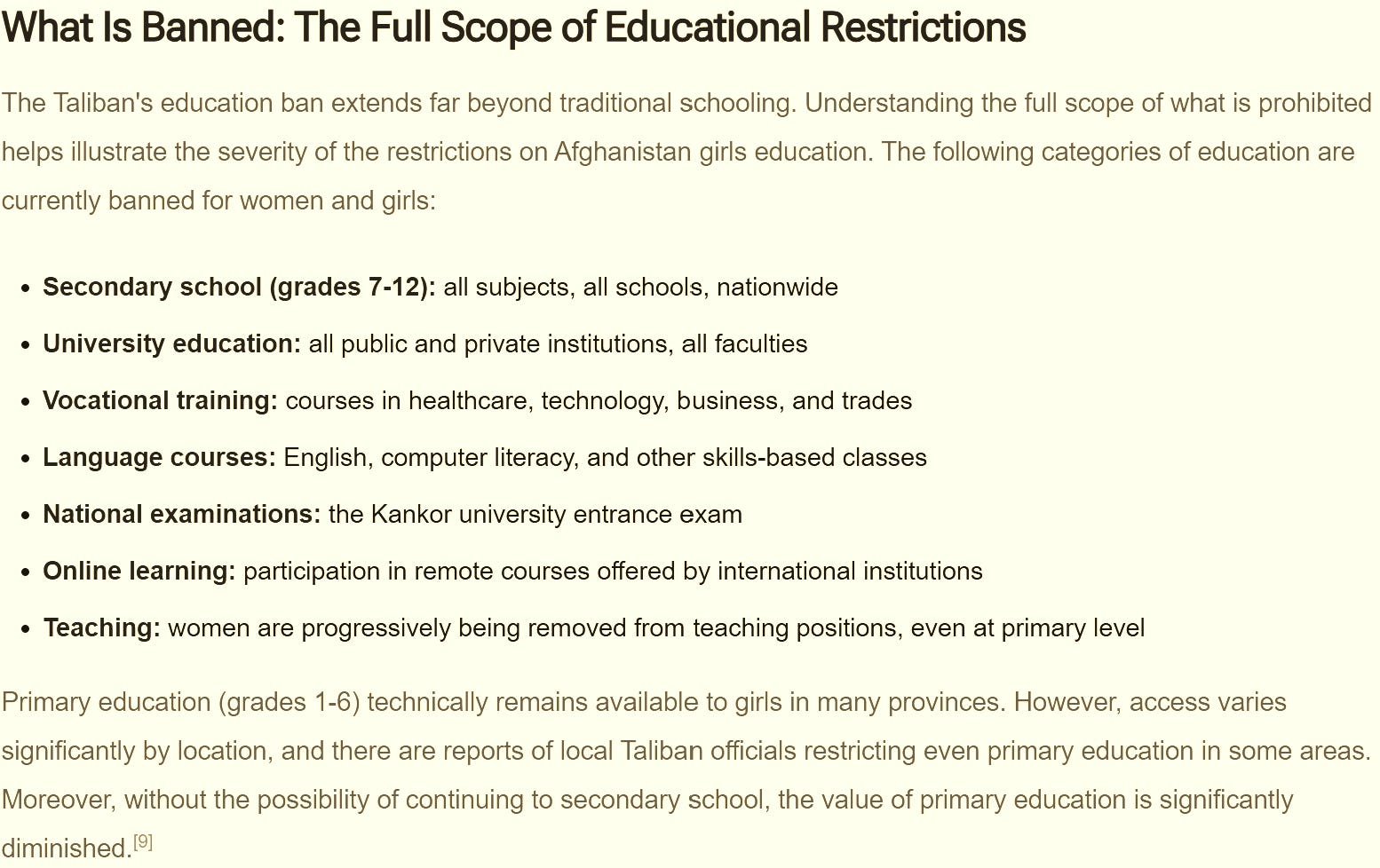
This timeline of decisions shows how central education has been to the Taliban’s redrawing of the social fabric. Although undoubtedly there are some in the Taliban who are sympathetic to girls’ education (e.g. see here) – if they are advocating, it is only privately, and with little visible impact. If anything, as will be seen later, it’s getting worse.
What Has Been the Response ?
The response from development organisations focused on supporting education, and particularly girls’ education, in Afghanistan has been both impressive and wholly inadequate.
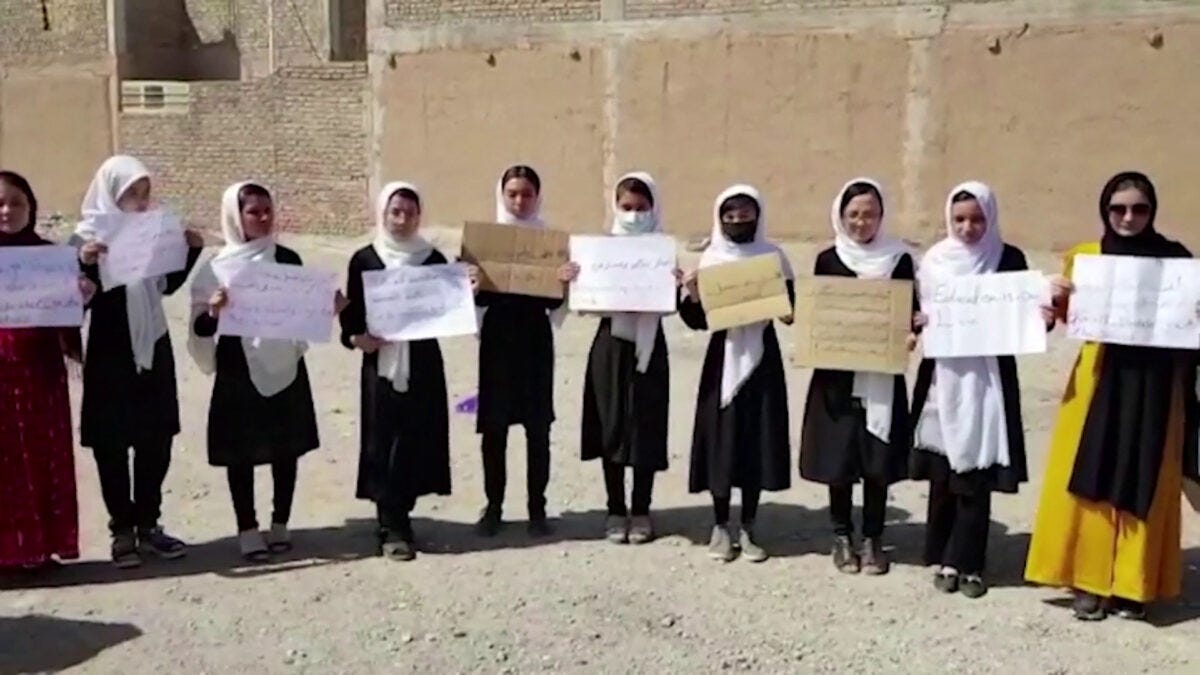
The impressiveness has been the sheer determination of small and large organisations to respond to the ever-worsening situation. They have reoriented, repurposed, reorganised and re-energised. By one estimate there are perhaps as many as 250 organisations supporting education in Afghanistan – from individual efforts by refugees to small NGOs to Universities.
The inadequacy is not the fault of any of these organisations – it’s the brutal reality that, collectively, all these efforts amount to a valiant attempt to use a sticking plaster to cover a gaping wound.
Take Charmaghz, an NGO that until 2025 was running a series of mobile libraries in and around Kabul recording more than 1 million visits from Afghan children since 2018. Last year, the Taliban forcibly closed the libraries. Charmaghz had to quickly pivot from a large-scale, conspicuous programme to an online education model that is delivered more discretely and safely but with a more limited reach.
Charmaghz’s CEO, Liz Robinson, says their ambition this year is to support the education of around 450 girls - far fewer than the Mobile Library program - though prioritising depth, learning and continuity for smaller cohorts through a mix of book clubs and online programmes. Demand is far higher than capacity, with more than 900 girls applying for 45 secondary school places.
There’s a similar story with the Alliance for the Education of the Women of Afghanistan (AEWA), a network of over 120 organisations working for Afghan women and girls’ education (more than 60% Afghan led). Lauryn Oates, the Executive Director of Right to Learn Afghanistan who co-chairs AEWA, estimates that the affiliated organisations (plus some non-affiliated) are currently reaching approximately 400,000 Afghan women and girls, ranging from clandestine secret schools of 25 to online university course for 10,000.

These examples are the reality of the reach of quality supported programmes in 2026 in an environment where it’s dangerous to even mention the names of staff working in Afghanistan. Nonetheless, these efforts, laudable as they are, pale beside the estimated 2.4m girls excluded from secondary and maybe 100,000 from higher education. Primary education has not been banned, but, even here change is significant, quality declining and, says Fatima Faizi, boys are also affected.
And the Next 5 Years ?
Could it get any worse than being the only country in the world to ban girls’ education ? Unfortunately, yes, much worse.
A recent report from the Hamrah Network called “Taliban Madrasas : Ideological Consolidation, Gender Persecution and Afghanistan’s Future Stability” says :
In under five years, the Taliban have constructed a parallel education infrastructure that now exceeds the reach of Afghanistan’s formal public school system, extending ideological control into families, communities, prisons, and orphanages.
In 2021 there were thought to be 5,000 registered Madrasas. By 2025 there were reportedly 23,000 Madrasas compared to 18,000 public and private schools. The Hamrah report comments :
The long-term implications are profound. A generation educated exclusively within this framework will inherit and enforce a social order in which gender persecution is not policy but doctrine — normalised, naturalised, and sanctified by religious authority. This is, by design, self-perpetuating.
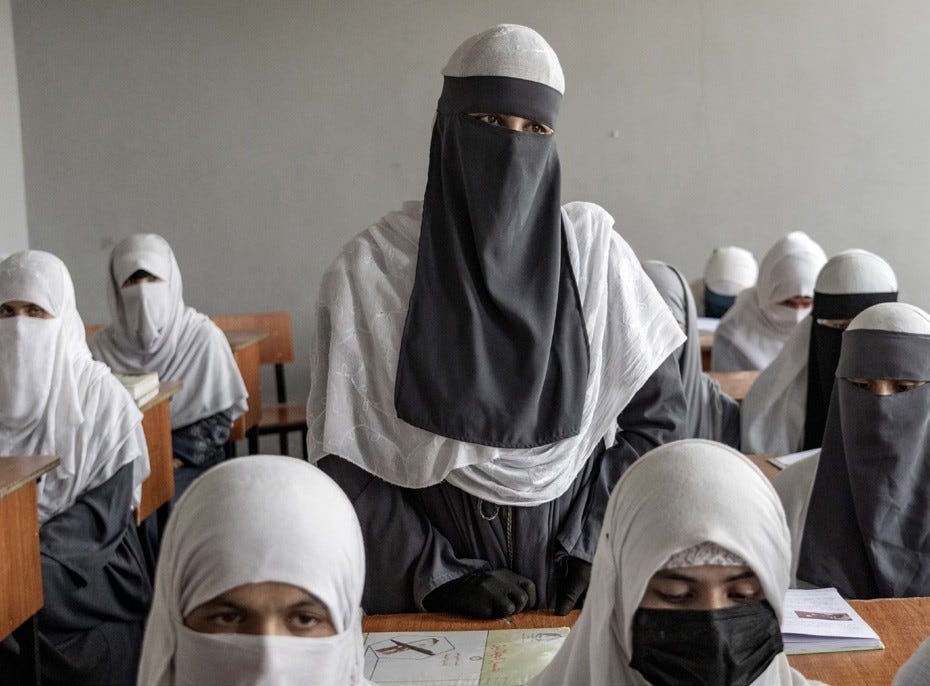
This is existential – for women and girls in Afghanistan and for their supporters outside. “It is an education system built by a regime that expects to rule for generations to come.” says Lynne O’Donnell.
What has been the response of the international community ? “Fatigue” say several respondents pointing to the bandwidth consumed by the Gaza and Ukraine conflicts, not say nothing of Sudan and Myanmar. Others point out that, astonishingly, some international tenders in education from UN agencies require working with the Taliban. Donors, hamstrung by bureaucracy and an aversion to working around governments, seem stuck in an old mindset.
There is also a concern at creeping “normalisation”. There is a quiet drumbeat for re-engagement with the Taliban (e.g. “Is it time to talk to the Taliban ?” The Economist). The increasing official and unofficial contacts with the Taliban, and a reduction in public censure and criticism, emboldens those in power.
Hope and Expectation
In the midst of this bleak outlook, are there any reasons for hope ?
Lauryn Oates comments that among their members they see two distinct threads of response : innovation and collaboration. Innovation has been forced on organisations working out how to deliver programmes to girls and women in a country where women’s access to the internet is less than 10%, all the while protecting their identities. The result has been clandestine schools, children who cross borders to learn, and interpretation of the “rules” which do not specifically forbid online learning.
Just as importantly, there is evidence that organisations which once competed with each other are putting those differences aside, sharing best practice, and agreeing common standards for certification and recognition of prior learning. For example, a set of learning quality standards were piloted with five AEWA member organisations before being revised and rolled out more widely.
Are donor agencies and philanthropists raising their game in this way ? The jury is out. It does seem astonishing that a network like AEWA, set up to create this kind of coordinated, collaborative response should be struggling to receive financial support from donors or philanthropists (see this suggestion from Liz Robinson).
One of the strongest features of the Hamrah report is the really clear and practical set of recommendations for action that it sets out. In education this includes challenging UNESCO and UNICEF to document and amplify awareness about the madrasas programme ; supporting more scholarships for online education for women and creating alternate pathways for employment for women (e.g. hiring Afghan women to provide graphic design (see here) or other remote services).
What can you do ?
During the Cold War there was a clandestine programme of subversion involving smuggling books and art into countries behind the iron curtain, notably Poland, with considerable success (even credited with helping bring down the Jaruzelski regime). The current moment feels eerily similar, a struggle between the universal values of freedom to learn and develop with the values of an ultraconservative interpretation of Islamic law.
The lines have been drawn and education has been defined as the key battleground over which the soul of Afghanistan will be fought.
In the larger scheme of things, the Taliban represent a Canute-like cry against modernity. They are on the wrong side of history and will, in due course, be pushed aside or be forced to reform, whether that is in months, years or decades. As Murwarid Ziayee, Senior Director at Right to Learn Afghanistan points out, in the depths of the first Taliban rule she lost 5 years of her education. But, in 2001 she was able to rejoin her university and complete her studies. That’s the hope she gives girls now.
The tragedy is that the sacrifices for this theocratic experiment are being made by those who had no say in it, implemented at the expense of the least powerful in society.
The opportunity is that there is agency in all of us to play a small part in resisting this educational nihilism.
Time to get subversive.
Andy Brock, August 2026
News
At least 300 children killed in Gaza in the 300 days since the “cease fire” says UNICEF. That this has become “normal” and accepted is shameful.
Harvard Graduate School of Education is running a 6 week online Education in Emergencies Certificate Program. Course Director is Robert Jenkins ex-Head of Education at UNICEF. Apply by 2nd September.
Here’s a piece of good news : the Manahel programme (FCDO funded) has moved its team from Gazientep in Turkey to Damascus. Full report here.
And another…student power. Prime Minister Narendra Modi announced the creation of a task force to overhaul India's examination system, following weeks of youth protests (the “Cockroach” movement) about exam paper leaks resulting in the resignation of the Minister of Education.
Kenya announces fee free higher education starting September - if passed by parliament.
Development
Great piece by Dan Honig (“Mission Driven Bureaucrats” – and the underpraised “Navigating by Judgement”) in the In Development Magazine, on the mystery of why data collection in South Sudan around 2012 was so trusted when almost nothing else in the country was. A story of individual leadership, incentives not penalties, and the human factor as a key ingredient in what constitutes institutional development.
Liz Robinson (mentioned above) has a post titled The 50 Billion Dollar Question: Who Gets a Piece of the AI Pie, Who Doesn’t, and Who Decides? She analyses why organisations working on the frontline, in very difficult and different circumstances (e.g. no working with Taliban government ; difficult to attribute or measure results etc.) become illegible for funding from philanthropic organisations.
Yes, illegible, not ineligible. It’s a smart take on the “being in the right rooms, meeting with the right people” meme. Illegible means such organisations can’t be “read” and therefore understood as easily as those who are closer to the funders.

The premise of Robinson’s piece is the so called “third wave of American philanthropy” (range $37-100bn) that I mentioned last month (emanating from an article by Nan Ransohoff) – coming from the obscene amounts of money some individuals are going to make on the flotations of Anthropic and Open AI platforms and citing Open AI’s Foundation as one example of a charity which will receive this windfall.
For the sceptics among you – and there should be many – try Morgan Fairless’s thoughtful comment on this bubble of excitement and anticipation : “What if the Third Wave is a Puddle ?” More likely to be the shape of things to come ?
I was critical of the piece by Dean Karlan and Rachel Glennerster (last issue) that argued for picking simple solutions in a cash-starved aid world, but Dr. Madeleine Ballard, for similar reasons, is positively scathing. “Every one of these interventions depends on the thing simplifiers want to stop paying for : the delivery system.” In other words, paying for the ingredients and not for the meal (see Newman and Warner below).
AI Spy
Interesting addition from Dan Mayer to the commentary on Alpha Schools (highlighted in last issue). He raises the question of selection and cost as determinants of the “success” of children in these schools. His post here.
There’s a new World Bank report out : “Supporting cost-effective AI adoption in Education”. Similar themes to the Ed Tech report from Brookings mentioned last month. How do governments choose the best solutions in such fast moving environment ? With great care. Link to blog and report here.
Voices from the front
In a nicely written, and quite personal, essay entitled Fragile, Silent, Pitiable, Divided and Isolated: What is going on with our children ? Zhou Juan describes the “silent” internal lives of many Chinese children. She argues that withdrawn or phone-glued children are not “selfish” or self-obsessed but rather that their sense of self is under-developed as a result of a lack of meaningful social interaction.
It’s not a big leap from this to the concern expressed in Parul Minhas’s piece on how spaces for adolescents at school and community are under-designed, or just an afterthought. The needs of a 9-year old in terms of space, play and exploration are very different from a 15-year-old.
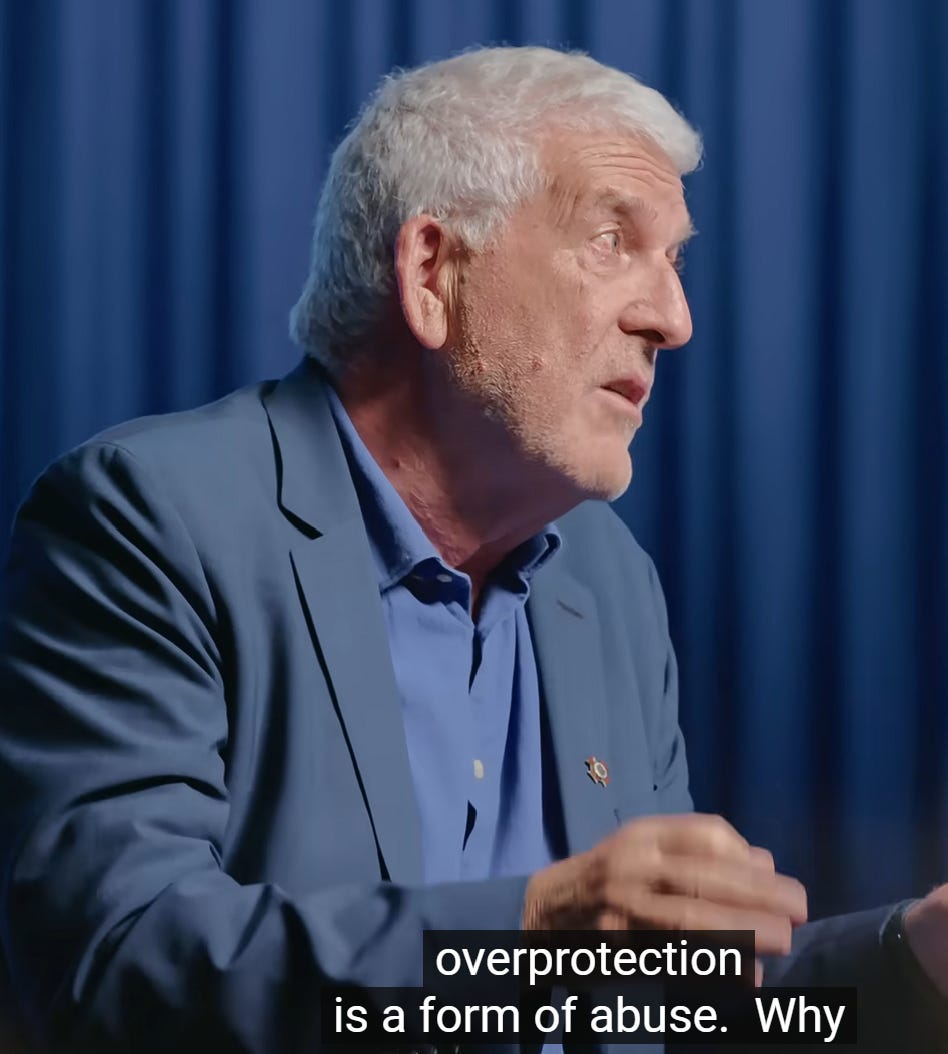
In the comments to this post Rebecca Ma Lozano linked this very short but worthwhile video of Spanish educator Gregorio Luri talking about the lack of risk taking in childhood (aka helicopter parenting). He has some arresting phrases including : “overprotection is a form of abuse”. It’s in Spanish, but you can turn on autotranslate (go to settings then refresh page).
Voices from the rear
(Gray and Published Research)
Kirsty Newman and George Werner of Luminos Fund have an article in the Stanford Social Innovation Review called “Right Ingredients, Wrong Recipe: What It Takes to Really Get Children Learning”. It’s a timely piece focusing on the process and the results of education change, not just the inputs. It also presents very clearly that learning outcomes can only be achieved through behaviour change – and behaviour change takes patience, support and a very long time.
The comments include one well worth reading by Sandeep Mishra former country Director of STIR Education India. He identifies two additional points : the need for mentor teachers to continuously support change and the essential buy in of the bureaucracy to financial sustainability of reform.
If I have one niggle about the piece (and I’ve made it about other pieces too) “good examples” are cited from Vietnam, South Korea and Brazil. Rarely cited is the most successful example of education reform in our lifetimes – China. Whatever your view of China, it’s many educators’ blindspot.
There’s a new paper out on support to Higher Education in Gaza : “Remote higher education partnerships in crisis: reflections and practical insights from the Gaza education research virtual fellowship” Junina et al.
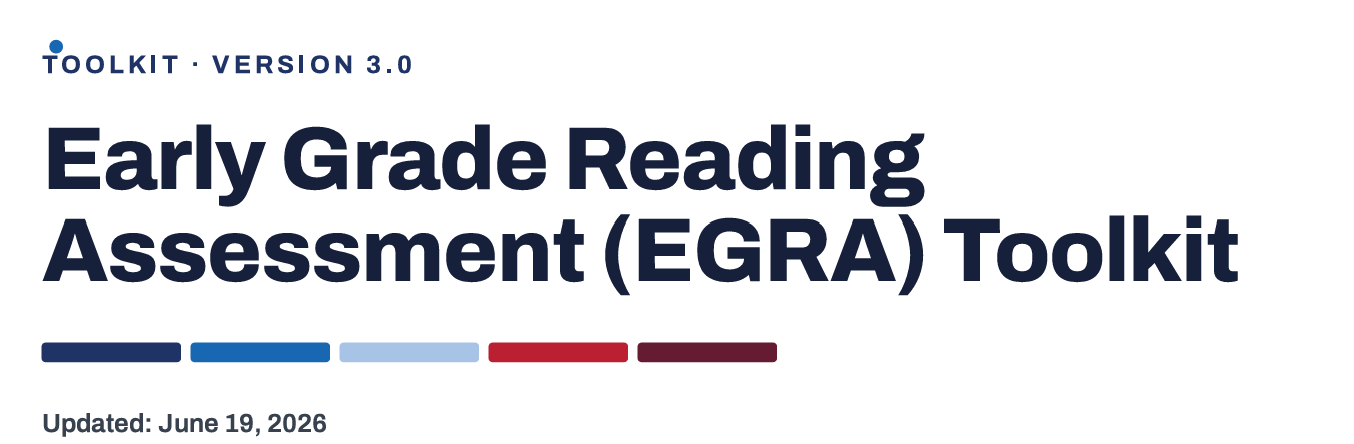
EGRA still lives, hurrah ! Version 3.0 just published - kudos to Heta Thukral and Aimee Reeves.
Podcasts, Films and Books
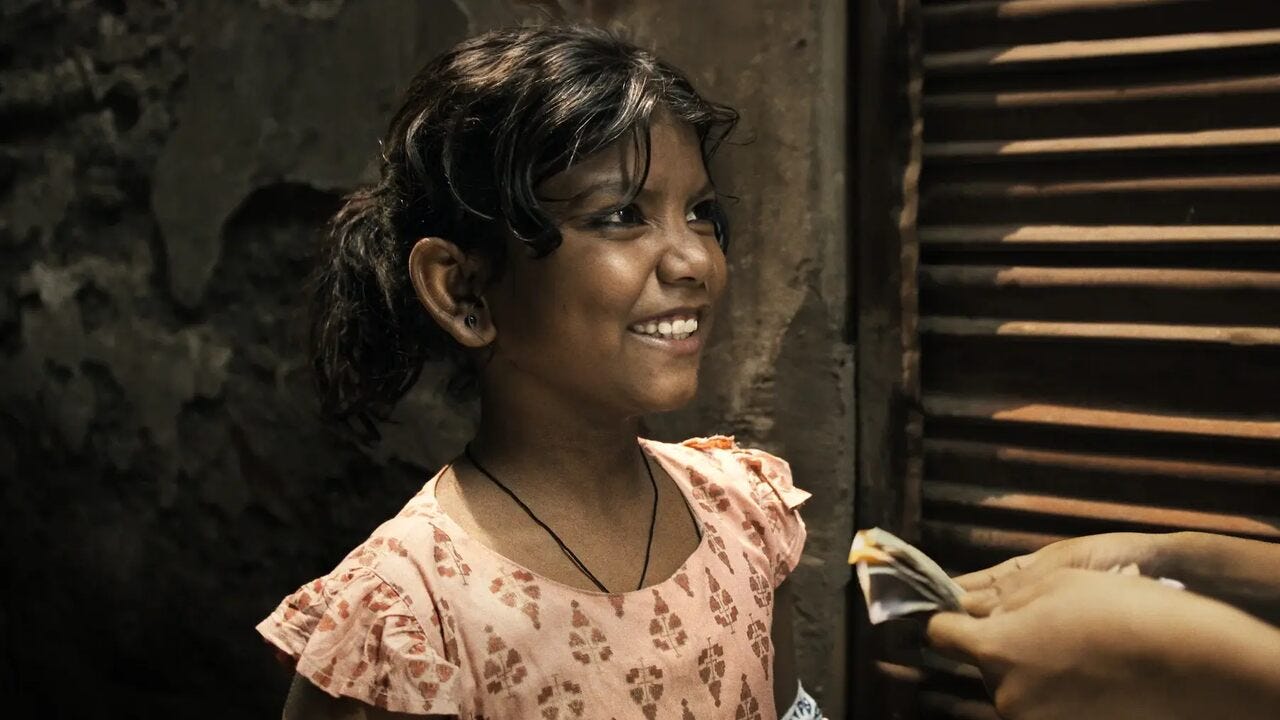
Anuja, a lovely short film (just 22 minutes) available on Netflix about two sisters in Delhi and the opportunity (taken, not taken ?) that education brings to change lives.
“What’s inside the Moon ?”. This is a marvellous, verbally evocative, and at times very moving, podcast (from the audio magazine Signal Hill) about educator and poet Kenneth Koch which traces some of the children (now in their sixties) who he taught poetry to in a rough public school in New York :
Koch did a lot to establish what is now taken for granted in public consciousness : that children can write poetry. It brings out the influence of teachers on our lives, the imagination that can be released in children who are given free rein, and the vulnerability and honesty that poetry inspires.
…when you’re a kid there’s a world of possibility that you wish for, and then when you’re my age you wish for…you wish things weren’t so painful.
Homer’s The Odyssey. There’s a reason it’s still published nearly 2,700 years later : it’s amazingly good. Whether you’ve seen the film or not, the poem and the stories in it are wonderfully lyrical, and foundational to much of western culture.
And finally
The late, great, James Baldwin, had many remarks, like this one, that seem prescient in times of tragedy and trauma. Or is it just that the form of our “modern” world seems changed, but its substance remains stubbornly the same ?
Choosing not to be a monster is an active choice, and more necessary than ever. You could be that monster.

If you know someone who would be interested in reading this newsletter, please pass on, by clicking the share button below. Subscription is free - subscribers receive each issue of Re Education automatically every month.